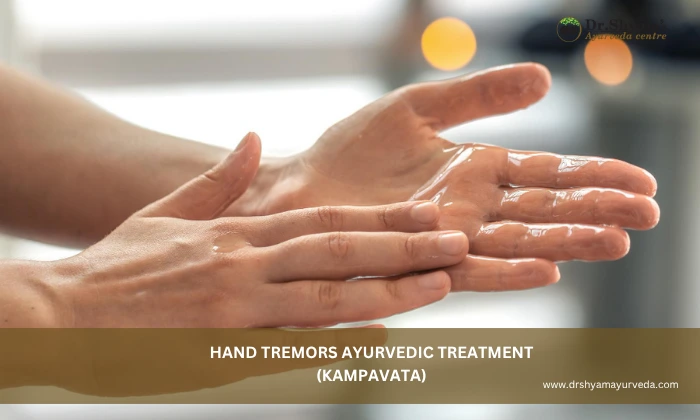
Noticing a slight shake in your hands especially when holding a cup, writing, or trying to stay still can be unsettling. In Ayurveda, this condition is known as Kampavata, and it’s understood as a Vata dosha imbalance affecting the nervous system. This guide explains how Ayurveda views hand tremors, what treatment options are commonly used, and how a combination of therapies, diet, and lifestyle changes may help support long-term management.
At Dr. Shyam’s Ayurveda in Dubai, our approach to Kampavata begins with a thorough assessment, since tremors can have several underlying causes and each case needs an individualized plan.
Key Takeaways
- Hand tremors are involuntary shaking movements that can stem from several different causes, including a condition called essential tremor.
- Kampavata is the Ayurvedic term for tremor-related conditions, primarily linked to an aggravated Vata dosha.
- Hand tremors have multiple possible causes, ranging from stress and fatigue to neurological conditions like essential tremor or Parkinson’s disease.
- Ayurvedic treatment typically combines internal medicines, Panchakarma therapies, external treatments like Abhyanga, and Vata-pacifying diet and lifestyle changes.
- Ayurveda may help support tremor management as part of a broader care plan, but it should complement, not replace, medical evaluation for tremors with an unclear or serious underlying cause.
- Consulting a qualified Ayurvedic practitioner early allows for a treatment plan suited to your specific constitution and symptoms.
What Are Hand Tremors?
Hand tremors are involuntary, rhythmic shaking movements affecting one or both hands. They can be mild and occasional or more persistent, and they may appear at rest, while holding a position, or during specific actions like writing or lifting a cup.
What Causes Hand Tremors?
Tremors can originate from a wide range of causes, including stress and anxiety, fatigue, excessive caffeine intake, certain medications, low blood sugar, thyroid imbalances, and neurological conditions such as essential tremor or Parkinson’s disease. Ayurveda also considers digestive imbalances and nervous system depletion as contributing factors.
When Should You Seek Medical Attention for Hand Tremors?
You should consult a doctor promptly if tremors appear suddenly, worsen quickly, are accompanied by other symptoms, including muscle stiffness, slowed movement, difficulty speaking, or memory changes, or if they significantly affect your daily activities. A proper diagnosis is essential before starting any treatment approach, Ayurvedic or otherwise.
Kampavata: The Ayurvedic Perspective on Hand Tremors
What is Kampavata in Ayurveda?
Kampavata literally relates to “kampa” (tremor or shaking) and “Vata” (the dosha governing movement and the nervous system). In Ayurvedic understanding, Kampavata reflects a state where Vata has become aggravated and unsteady, affecting the body’s control over voluntary movement.
How Vata Imbalance may be Associated With Tremors
Vata dosha governs all movement in the body, including nerve impulses and muscular coordination. Vata becomes excessive or erratic often due to stress, irregular routines, poor digestion, or an inherently Vata-dominant constitution. Ayurveda associates this with instability in movement, which may manifest as tremors.
Common Symptoms Associated With Kampavata
Along with visible shaking in the hands, Kampavata may be associated with generalized weakness, dryness, restlessness, disturbed sleep, anxiety, and reduced strength or stamina which all patterns Ayurveda links to aggravated Vata.
Kampavata and Essential Tremor: Understanding the Difference
Kampavata is a broad Ayurvedic framework for tremor-related conditions, while essential tremor is a specific, medically diagnosed neurological condition. Someone with essential tremor may well be described as having Kampavata in Ayurvedic terms, but the reverse isn’t automatically true; not everyone with mild shakiness has essential tremor. This is why medical diagnosis and Ayurvedic assessment are complementary, not interchangeable.
Ayurvedic Treatment for Hand Tremors and Kampavata
Ayurvedic Medicines for Hand Tremors
Ayurvedic practitioners may recommend specific herbal formulations aimed at calming Vata and supporting nervous system function as part of hand tremors Ayurvedic treatment. The right ayurvedic medicine for tremors depends on your constitution, the severity of symptoms, and any underlying condition, so these should always be prescribed after a proper consultation rather than chosen independently.
Panchakarma and Other Ayurvedic Therapies
Panchakarma treatment in Dubai is often considered for Vata-related conditions like Kampavata, since this structured detoxification process is traditionally used to clear accumulated toxins and calm aggravated Vata. Whether Panchakarma is appropriate, and which specific procedures within it, depends on an individual assessment.
Abhyanga and Other External Therapies
Warm, medicated oil massage (Abhyanga) is traditionally used to pacify Vata, nourish the nervous system, and ease stiffness. Other external therapies may also be considered depending on the individual’s presentation, always as part of a supervised plan.
Diet and Lifestyle Modifications
A Vata-pacifying diet such as warm, well-cooked, and easily digestible meals with healthy fats along with a stable daily routine is generally recommended to support overall nervous system balance in Kampavata management.
How to Stop Hand Tremors Naturally With Ayurveda
Follow a Vata-Pacifying Diet
Warm, cooked, and lightly oily foods are generally favored over cold, dry, or raw foods when working to calm Vata. Regular mealtimes and avoiding excessive fasting or skipped meals also support digestive and nervous system stability.
Maintain a Regular Sleep and Daily Routine
Vata dosha is particularly sensitive to irregularity. Keeping consistent sleep and wake times, and following a steady daily routine (dinacharya), is considered an important part of how to stop hand tremors naturally within an Ayurvedic framework.
Practice Stress-Management Techniques
Since stress and anxiety are known to aggravate Vata and can worsen tremors, incorporating calming practices such as meditation, pranayama (breathing exercises), and adequate rest is often recommended as part of a Kampavata care plan.
Gentle Yoga and Physical Activity
Gentle, non-strenuous yoga and regular movement can support overall nervous system health, though any exercise routine should be suited to the individual’s condition and comfort level.
Ayurvedic Management of Essential Tremor
Can Ayurveda Help Manage Essential Tremor?
Ayurveda may offer a comprehensive approach to help manage some of the discomfort associated with essential tremor, through personalized herbal support, Panchakarma-based therapies, and lifestyle guidance. It isn’t positioned as a cure, and essential tremor should continue to be monitored by a neurologist or treating physician.
How Individualized Ayurvedic Treatment may Support Tremor Management
Because Kampavata presentations vary widely between individuals, an Ayurvedic practitioner tailors the treatment plan to the person’s specific symptoms, constitution, and overall health, rather than applying a single fixed remedy to everyone with tremors.
Why Professional Ayurvedic Assessment is Important
A qualified Ayurvedic practitioner can determine which therapies are suitable, at what intensity, and in what combination. Self-treating tremors without professional guidance is not recommended, especially given how many different conditions can present with similar shaking.
When to Consult an Ayurvedic Practitioner for Hand Tremors
If you’re dealing with persistent or bothersome hand tremors — whether linked to essential tremor, stress, or another cause already assessed by your doctor — a consultation with a qualified Ayurvedic treatment in Dubai practitioner can help determine whether a personalized Kampavata management plan is right for you. It’s also worth pairing this with everyday Ayurvedic habits, such as understanding the benefits of drinking from a copper vessel, as part of a broader Vata-balancing lifestyle. Our clinic takes the same individualized approach across a wide range of other conditions too, from low back pain, knee injuries, and heel pain to skin problems, keloid scars, and anal fissures.
Book your consultation today.
FAQs
1. Can Ayurveda treat hand tremors?
Ayurveda may help manage hand tremors as part of a personalized plan involving herbal support, Panchakarma-based therapies, and lifestyle changes, particularly for tremors associated with Vata imbalance. It isn’t a guaranteed cure, and underlying causes should first be assessed medically.
2. What is the Ayurvedic medicine for hand tremors?
There is no single fixed medicine for Kampavata are selected individually by a qualified practitioner based on the person’s constitution and symptoms, so a proper consultation is necessary before starting any herbal treatment.
3. How can I stop hand tremors naturally?
Supportive natural approaches include following a Vata-pacifying diet, maintaining a regular sleep and daily routine, managing stress through relaxation techniques, and staying gently active, alongside any professional Ayurvedic or medical treatment plan.
4. What is Kampavata in Ayurveda?
Kampavata is the traditional Ayurvedic term for tremor and shaking-related conditions, understood as arising from an aggravation of Vata, the bodily principle governing movement and nervous system function.
5. Can Ayurveda help with essential tremor?
Ayurveda may offer complementary support for managing some symptoms of essential tremor through personalized herbal and lifestyle approaches, but essential tremor should continue to be monitored and treated by a neurologist or physician.