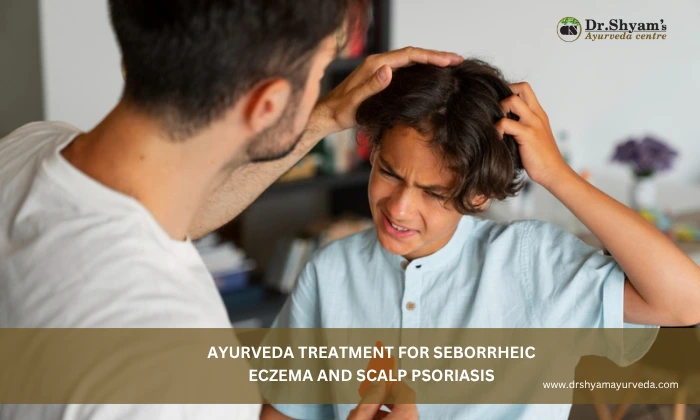
Scalp itching, flaking, redness, and scaling can be caused by several skin conditions, with seborrheic eczema and scalp psoriasis being two common causes. Although they may have similar symptoms, these are distinct conditions with differences in their appearance, distribution, and underlying mechanisms.
Ayurveda approaches scalp and skin conditions through an individualized perspective, considering factors such as Dosha balance, Prakriti, diet, lifestyle, and the nature of the symptoms. Depending on the individual’s assessment, Ayurvedic care may include dietary and lifestyle guidance, herbal medicines, selected scalp-care practices, external therapies, and other traditional approaches.
This article explores the differences between seborrheic eczema and scalp psoriasis, their common symptoms and triggers, and the Ayurvedic approaches that may be considered for their management. It also highlights the importance of personalized care and appropriate medical assessment when symptoms persist or the diagnosis is uncertain.
Key Takeaways
- Seborrheic eczema and scalp psoriasis can both cause itching, redness and scalp scaling but are different conditions.
- Seborrheic dermatitis often produces greasy white or yellowish scales, while scalp psoriasis may cause thicker, dry, silvery-white scales.
- Stress, environmental changes and individual triggers can contribute to flare-ups.
- Ayurveda traditionally approaches skin conditions through individualized assessment of diet, lifestyle, constitution and other factors.
- Ayurvedic scalp care may include selected oils, herbal preparations, dietary guidance and external therapies when appropriate.
- Panchakarma is not suitable for everyone and should only be considered following professional assessment.
- Persistent, severe or uncertain scalp symptoms should receive appropriate medical evaluation and diagnosis.
Seborrheic Eczema and Scalp Psoriasis: What Are They?
What is Seborrheic Eczema?
Seborrheic eczema, also known as seborrheic dermatitis, is a common chronic inflammatory skin condition characterized by scaly, flaky and itchy patches, inflamed skin, and pruritus. It mainly affects areas of the body that contain many oil-producing glands, including the scalp, face, sides of the nose, eyebrows, ears, eyelids, upper chest, and back.
When it affects the scalp in teenagers and adults, it is commonly referred to as dandruff. In infants, the condition is known as cradle cap. Other terms used for seborrheic dermatitis include seborrheic eczema and seborrheic psoriasis.
Seborrheic eczema is not contagious and does not cause permanent hair loss. However, it is a lifelong condition that can come and go, with periods of flare-ups and improvement. Although there is no cure, over-the-counter and medicated treatment options can help control the symptoms and manage the condition.
The exact cause is not completely understood. Factors involving the skin’s oil production, the yeast Malassezia and immune or inflammatory responses may contribute to the condition.
Read more: Ayurvedic Treatment for Migraine
What is Scalp Psoriasis?
Scalp psoriasis is a chronic, noncontagious, inflammatory, and autoimmune skin condition that affects the scalp. It occurs when the immune system mistakenly attacks healthy skin cells, causing them to reproduce too quickly, leading to a buildup of cells on the skin’s surface. This results in raised, reddish patches (plaques) covered with thick, silvery scales.
Scalp psoriasis can cause itching, redness, flaking, soreness, and discomfort. The condition may affect only the scalp or extend beyond it to the hairline, forehead, back of the neck, and skin around the ears. The severity can vary from mild scaling to thick, crusted plaques covering larger areas of the scalp. Scalp psoriasis may also occur along with psoriasis affecting other parts of the body.
How Seborrheic Eczema Differs From Scalp Psoriasis
Although seborrheic eczema and scalp psoriasis can both cause itching, redness, and scaling of the scalp, they differ in their appearance, distribution, and underlying causes.
- Appearance of scales: Scalp psoriasis typically causes thick, dry, silvery-white scales over well-defined, raised red or dark pink plaques. Seborrheic eczema usually produces thinner, greasy or yellowish flakes, often accompanied by less clearly defined redness.
- Location and spread: Scalp psoriasis can extend beyond the hairline and affect the forehead, back of the neck, or area behind the ears. It may also occur with psoriasis patches on the elbows, knees, or lower back and may be associated with nail changes such as pitting. Seborrheic eczema mainly affects oily areas, including the scalp, eyebrows, sides of the nose, and chest.
- Underlying cause: Scalp psoriasis is an autoimmune condition in which an overactive immune response causes skin cells to multiply too rapidly, leading to their buildup on the scalp. Seborrheic eczema is an inflammatory skin condition associated with Malassezia yeast and an abnormal inflammatory response, particularly in areas rich in oil-producing glands.
Because the two conditions can have overlapping symptoms, a healthcare professional may need to examine the scalp and other affected areas to distinguish between them.
Read more: Hand Tremors Ayurvedic Treatment
Can Both Conditions Affect the Scalp?
Yes. Seborrheic eczema and scalp psoriasis can both affect the scalp, and in some cases, features of both conditions may occur together. This overlap is commonly referred to as sebopsoriasis.
Sebopsoriasis has characteristics of both seborrheic eczema and psoriasis. It may cause redness, inflammation, and scaling, particularly in areas with a high concentration of sebaceous (oil-producing) glands, such as the scalp, face, and upper chest.
Because sebopsoriasis can share features of both conditions, it may not always be possible to make a precise diagnosis based on appearance alone. Over time, the condition may become easier to distinguish based on how the symptoms develop and how they respond to treatment.
Common Symptoms and Triggers of Seborrheic Eczema and Scalp Psoriasis
Seborrheic eczema and scalp psoriasis share several symptoms, although their appearance and underlying causes can differ.
Itching, Redness and Scalp Irritation
Itching is common in both conditions. Seborrheic dermatitis may cause an itchy, inflamed scalp, while scalp psoriasis can cause itching that ranges from mild to intense. Psoriasis may also cause burning or soreness. Repeated scratching can worsen irritation and cause the skin to bleed.
Flaking, Scaling and Greasy Patches
Seborrheic eczema commonly causes white or yellowish, greasy flakes, while scalp psoriasis tends to produce thicker, drier, silvery-white scales and well-defined plaques.
Factors That Can Trigger Flare-Ups
Flare-ups may be associated with cold, dry weather, stress, fatigue, and irritating hair or skin-care products. Changes in the scalp environment, including excess oil and Malassezia yeast, are particularly relevant to seborrheic eczema, while psoriasis is driven by immune-system activity.
The Role of Stress, Diet and Lifestyle
Stress can be relevant to both scalp conditions. It may coincide with flare-ups or make existing symptoms more difficult to manage.
Lifestyle factors such as sleep, hair-care practices, diet and exposure to environmental irritants may also influence overall scalp comfort. However, diet should not be considered a universal cause of seborrheic dermatitis or psoriasis.
A practical approach is to identify individual triggers rather than following unnecessarily restrictive diets.
Read more: Ayurveda Treatment for Skin Problems
Ayurveda for Seborrheic Dermatitis and Scalp Psoriasis
Ayurveda approaches seborrheic dermatitis and scalp psoriasis by focusing on balancing the doshas and using herbal remedies to support the health of the skin.
- Seborrheic Dermatitis: In Ayurveda, seborrheic dermatitis may be correlated with Darunaka, a condition associated with an imbalance of Vata and Kapha doshas. It may cause dryness or greasy scaling, itching, and flaking.
- Scalp Psoriasis: Scalp psoriasis may be considered under Kushtha, a group of chronic skin conditions, or Eka-kushtha. It is associated with deeper tissue imbalances and inflammation, involving Kapha–Pitta or Vata dosha imbalance.
Ayurvedic Treatment for Seborrheic Dermatitis on Scalp
At Dr. Shyam’s Ayurveda, Ayurvedic management of seborrheic dermatitis focuses on balancing the doshas, supporting skin health, and maintaining scalp hygiene. Treatment may be tailored according to an individual’s Prakriti and the severity of the condition.
Dietary and Lifestyle Modifications
Ayurveda emphasizes dietary and lifestyle measures to support internal balance. Traditional Ayurvedic approaches may recommend paying attention to foods and habits that appear to worsen an individual’s symptoms. The focus is generally on maintaining a balanced diet and identifying personal triggers rather than following the same restrictive diet for everyone.
Limiting spicy, sour, salty, deep-fried, fermented, and heavy foods may help reduce factors associated with Kapha and Vata imbalance. Bitter and astringent foods, such as bitter gourd, leafy greens, turmeric, and ginger, may be included.
Adequate sleep, stress management through Pranayama and meditation, regular routines, and appropriate scalp hygiene can also support overall wellbeing.
Herbal Medicines for Skin and Scalp Support
Ayurvedic practitioners may select herbal medicines or formulations based on an individual’s symptoms and health history. The choice of herbs and formulations should be individualized. Self-prescribing Ayurvedic medicines is not advisable, particularly if you are taking other medications or have an existing medical condition.
At Dr. Shyam’s Ayurveda, treatment for skin conditions is described as individualized, with internal medicines and external therapies selected following assessment. Preparations such as Khadirarishta, Mahamanjishtadi Kwath, and Kaishore Guggulu may be prescribed based on individual needs. Herbs such as Neem, Guduchi, and Amala are also traditionally used for their supportive properties.
Ayurvedic Oil and Scalp Care
Oil application is an important component of traditional Ayurvedic practice, but not every Ayurvedic oil is suitable for every scalp condition. Dr. Shyam’s Ayurveda specifically notes that the choice of oil should depend on factors such as constitution and dosha state, and that oil therapies have both indications and contraindications.
For seborrheic dermatitis and scalp psoriasis, traditionally used preparations such as Ayyappala thailam or Eladi keram may be considered in selected cases. The clinic’s existing guidance describes applying selected oils before scalp washing. However, people with an inflamed or highly sensitive scalp should not experiment with multiple oils on their own. A practitioner should determine whether oil application is appropriate.
Herbal Hair Washes and Scalp Hygiene
Gentle scalp cleansing is an important part of managing a flaky scalp. Traditional Ayurvedic scalp-care approaches may include selected herbal preparations for washing. Dr. Shyam’s Ayurveda describes the use of Triphala powder mixed with water as one traditional scalp-wash approach for seborrheic dermatitis.
At the same time, medically recognized scalp conditions may require evidence-based medicated shampoos or other dermatological treatment. Regular gentle cleansing and avoiding aggressive scratching or picking can help reduce irritation.
Panchakarma Therapies When Clinically Appropriate
For chronic or recurrent cases, Panchakarma therapies may be considered under the supervision of an Ayurvedic physician. Depending on the individual’s condition, therapies such as Virechana, Shirodhara, and Shirolepa may be recommended as part of a personalized treatment approach.
Ayurveda Treatment for Scalp Psoriasis
At Dr. Shyam’s Ayurveda, Ayurvedic management focuses on balancing the doshas and supporting skin health through internal and external approaches.
Managing Scalp Scaling and Irritation
Ayurvedic scalp care may focus on gentle external applications and individualized treatment rather than aggressive removal of scales. If thick plaques are present, professional assessment is especially important before applying oils, herbal pastes or other preparations.
Gentle scalp care is important to manage scaling and irritation. Neem, Triphala, or fenugreek (methi) water may be used as herbal rinses. Harsh scalp products should be avoided, and traditional cleansers such as Shikakai and Reetha (soapnut) may be used for gentle cleansing.
Supporting Healthy Skin Through Diet
Ayurvedic treatment traditionally gives importance to dietary habits when managing skin concerns. Rather than following a universal psoriasis diet, it may be more useful to maintain a balanced eating pattern and identify foods that appear to trigger or worsen symptoms in an individual.
Dr. Shyam’s Ayurveda’s existing skin-care guidance discusses dietary modifications as part of its Ayurvedic approach to psoriasis, while emphasizing individualized treatment. Ayurveda emphasizes dietary practices to support Agni and maintain dosha balance. Foods such as bitter gourd, cucumber, bottle gourd, ash gourd, and whole grains may be included. Spicy, salty, sour, fried, and heavily processed foods, along with fermented foods and heavy dairy products, may be limited.
Read more: Keloid Treatment in Ayurveda
External Ayurvedic Therapies
Depending on the individual’s assessment, Ayurvedic external therapies may form part of a treatment plan for scalp and skin concerns. Dr. Shyam’s Ayurveda describes traditional therapies such as Abhyangam, Lepanam, Udvarthanam, and Takradhara within its broader approach to skin conditions.
These therapies should not be considered universally appropriate. The type of therapy, preparation and duration should be decided by an Ayurvedic physician after assessing the individual’s condition.
Lifestyle and Stress Management
Stress is a recognized trigger that can contribute to psoriasis flare-ups. Ayurveda emphasizes maintaining a regular daily routine, adequate sleep, and practices such as Pranayama, meditation, and gentle yoga to support relaxation and stress management.
Stress management does not replace psoriasis treatment, but it can be a useful component of an overall approach to managing a chronic condition.
Importance of Personalized Treatment
There is no single Ayurvedic treatment for scalp psoriasis that is appropriate for everyone.
The severity of scaling, scalp sensitivity, duration of symptoms, other skin involvement, lifestyle, diet and individual health history may all influence the approach.
At Dr. Shyam’s Ayurveda, treatment plans are developed following individual assessment, with traditional medicines and therapies selected according to the person’s needs.
Personalized Ayurvedic Care for Scalp Health
Seborrheic eczema and scalp psoriasis can both cause persistent itching, scaling and irritation, but they are not the same condition. Accurate identification of the problem is therefore an important first step before choosing a treatment approach.
Ayurveda takes a personalized approach to scalp and skin health, traditionally considering the individual’s constitution, diet, lifestyle and symptoms. Depending on the assessment, care may include dietary guidance, herbal support, selected scalp oils, external therapies and, where clinically appropriate, Panchakarma.
At Dr. Shyam’s Ayurveda, Ayurvedic treatment plans are tailored to individual needs rather than relying on a single remedy for every scalp condition.
If you are experiencing persistent scalp scaling, itching or irritation, consult an Ayurvedic physician for an individualized assessment and discuss whether Ayurvedic care is appropriate alongside any dermatological treatment you may require.
FAQs
1. What is the Ayurvedic treatment for seborrheic dermatitis?
Ayurvedic management may include individualized dietary and lifestyle recommendations, selected herbal medicines, scalp oils, herbal cleansing practices and external therapies. In some cases, Panchakarma may be considered. The treatment depends on the individual’s symptoms and Ayurvedic assessment. It should not be assumed that one oil, herb or therapy will work for everyone.
2. Can Ayurveda help with scalp psoriasis?
Ayurveda may be used as a complementary approach to support the management of scalp psoriasis. Traditional Ayurvedic care may include dietary guidance, lifestyle measures, external therapies and individualized medicines.
However, psoriasis is a chronic inflammatory condition, and appropriate medical assessment and evidence-based treatment remain important. Ayurvedic treatment should not be used as a reason to discontinue prescribed psoriasis medication without medical advice.
3. What Ayurvedic oil is used for seborrheic dermatitis?
There is no single Ayurvedic oil that is suitable for everyone with seborrheic dermatitis. Dr. Shyam’s Ayurveda describes preparations such as Ayyappala thailam and Eladi keram as options used in its traditional scalp-care approach. The appropriate oil should be selected by an Ayurvedic practitioner based on the individual’s scalp condition and overall assessment.
4. Is seborrheic dermatitis the same as scalp psoriasis?
No. They are different conditions, although they can look similar. Seborrheic dermatitis commonly produces greasy white or yellowish scaling, whereas scalp psoriasis often causes thicker, drier plaques with silvery-white scales. Because the conditions can overlap, professional assessment may be needed to distinguish them.
5. Can seborrheic dermatitis and scalp psoriasis occur together?
Yes. A person can have both conditions. This combination is sometimes referred to as sebopsoriasis. If your scalp symptoms do not respond to usual dandruff care or keep recurring, obtaining an accurate diagnosis is important.
6. How long does Ayurvedic treatment for scalp conditions take?
There is no fixed treatment duration. It can depend on the type and severity of the scalp condition, how long you have had symptoms, your individual health history and the treatment plan recommended after assessment. It is better to avoid claims of a guaranteed number of days or weeks for improvement.
7. When should I consult an Ayurvedic doctor for scalp problems?
Consider consulting an Ayurvedic doctor if you have persistent scalp flaking, recurring irritation, excessive scaling or symptoms that interfere with your daily life. Professional assessment is particularly important when you are unsure whether the problem is dandruff, seborrheic dermatitis, psoriasis, eczema, fungal infection or another scalp condition. You should also seek appropriate medical attention if you develop significant pain, bleeding, infection, extensive hair loss, rapidly worsening symptoms or involvement of other areas of the body.