Key Takeaways
- Keloids are raised scars that can grow beyond the boundary of the original wound and generally do not shrink on their own.
- Ayurveda approaches keloid scar management through dosha-based assessment, herbal and topical care, and diet and lifestyle guidance.
- Ayurvedic treatment for keloids can support skin health and comfort, but it does not guarantee complete removal of an existing keloid.
- Persistent growth, pain, or restricted movement near a joint should always be evaluated by a qualified doctor.
Keloid scars can be frustrating to live with. They’re often itchy, sometimes tender, and don’t fade the way an ordinary scar does. If you’ve been searching for a gentler, root-cause way to manage them, keloid treatment in Ayurveda focuses on the skin and blood tissue as a whole, rather than only the visible mark left behind. This guide walks through what keloids are, why they form, and how an experienced Ayurvedic clinic approaches their care.
What is a Keloid Scar?
How Keloids Develop After Skin Injury
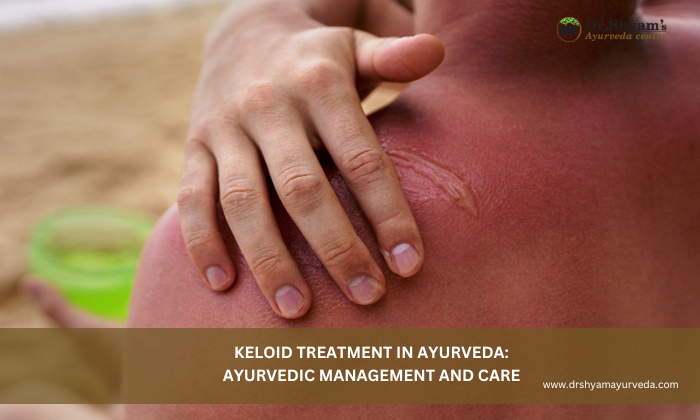
A keloid is a type of raised scar that forms when the skin overproduces collagen while healing from an injury. Keloids are raised scars that can grow beyond the boundaries of the original wound, extending well past the site of the original cut, burn, piercing, or acne mark.
Keloid vs Hypertrophic Scar
Keloids and hypertrophic scars are often confused, but they behave differently. A hypertrophic scar stays within the boundary of the original wound and tends to flatten over months. A keloid, by contrast, spreads beyond the wound edges and, as clinical literature notes, keloids can continue to enlarge and generally do not spontaneously regress, which is why they often need active management.
What Causes Keloids?
Common Causes and Triggers
Keloids typically form after skin trauma caused by surgical cuts, burns, ear piercings, vaccination sites, acne, or even minor scratches. In Ayurvedic terms, an aggravated Pitta and Vata response during the healing process is thought to drive the excess tissue growth seen in keloid formation.
Who is More Likely to Develop Keloids?
A family history of keloids, darker skin tones, younger age groups, and a personal history of forming keloids from a previous injury all raise the likelihood of developing new ones.
Common Areas Where Keloids Appear
Keloids most often appear on the chest, shoulders, earlobes, upper back, and jawline — areas that naturally experience more skin tension. The American Academy of Dermatology notes that keloids may cause itching, pain, tenderness, or restricted movement when they develop near a joint.
Keloid Treatment in Ayurveda
Ayurvedic Approach to Keloid Scar Management
Ayurveda views a keloid as a sign of vitiated Pitta and Vata affecting the Rakta (blood) and Mamsa (muscle) tissues during the healing process. The goal of treatment of keloid in Ayurveda is to pacify these aggravated doshas, support healthy tissue regeneration, and gradually soften and reduce the density of the scar tissue.
Individualised Ayurvedic Assessment
No two keloids or two people are treated the same way. A qualified Ayurvedic doctor examines the scar’s age, size, location, and the person’s overall constitution (prakriti) before recommending a plan, which is why an in-person consultation at a genuine ayurvedic treatment in Dubai clinic matters more than following generic advice online.
Herbal and Topical Approaches
Depending on the individual case, Ayurvedic doctors may recommend herbal oils and pastes formulated to soften scar tissue, along with internal formulations to support healthy skin and blood tissue. Panchakarma-based detoxification is sometimes used as part of a broader plan — a structured Panchakarma Treatment in Dubai programme can work alongside topical scar care.
Role of Diet and Lifestyle in Skin Health
Ayurveda also looks at what supports skin from within. A Pitta-pacifying diet, adequate hydration, and simple daily habits, including the traditional practice of drinking water stored in a copper vessel are often recommended to support overall skin and tissue health during keloid care.
How to Manage Keloids Naturally
Protecting the Scar From Irritation
Keeping the area clean, avoiding tight clothing or jewelry that rubs against the scar, and protecting it from sun exposure can help prevent further irritation while undergoing treatment.
Avoiding Unproven Home Remedies
It’s tempting to try remedies found online, but applying unverified substances directly to a keloid can irritate the skin further or delay proper treatment. Anyone looking to heal keloids naturally should do so under the guidance of a qualified Ayurvedic doctor rather than through trial and error.
Can Ayurveda Completely Remove Keloids?
What to Expect From Natural Scar Management
Ayurvedic care can help soften scar tissue, ease itching and discomfort, and support the skin’s healing response over time. However, it’s important to set realistic expectations. Natural treatment for keloid scars may visibly improve their appearance and symptoms, but it does not guarantee complete disappearance of an existing keloid, especially larger or long-standing ones.
Why Professional Assessment Matters
Because keloids behave differently from person to person, a proper assessment helps determine whether Ayurvedic care alone is suitable or whether it should be combined with other medical options for the best outcome.
Medical Treatments for Keloids
Steroid Injections and Silicone Therapy
Corticosteroid injections are commonly used to flatten keloids and reduce itching, often paired with silicone sheets or gels applied directly over the scar.
Cryotherapy, Laser Therapy and Other Options
Other approaches include cryotherapy (freezing the tissue), laser therapy to reduce redness and thickness, and in some cases surgical removal. Though surgery alone carries a notable risk of the keloid returning, which is why it’s usually combined with other treatments.
When Should You See a Doctor for a Keloid?
Signs That Require Medical Evaluation
You should see a doctor if a scar continues to grow well beyond the original wound, becomes increasingly painful or tender, restricts movement near a joint, or changes in color, texture, or bleeding pattern.
Why Early Assessment Can Help
Early evaluation gives you a clearer picture of your options. Whether that’s Ayurvedic management, conventional dermatological treatment, or a combined approach, before the scar becomes larger or more difficult to manage. If you’re also managing an unrelated issue such as low back pain, an anal fissure, a knee injury, or another skin concern, a qualified Ayurvedic doctor can assess everything together as part of one personalized care plan.
FAQs
1. What is keloid treatment in Ayurveda?
It’s an approach that treats keloids as a result of aggravated Pitta and Vata affecting the skin and blood tissue, using herbal formulations, topical applications, and diet and lifestyle guidance to support healthier scar tissue over time.
2. Can Ayurveda completely remove keloid scars?
Not always. Ayurvedic care can soften and reduce the appearance of a keloid and ease associated symptoms, but complete removal isn’t guaranteed, particularly for larger or older scars.
3. How can I manage keloids naturally?
Protecting the area from friction and sun exposure, following a Pitta-balancing diet, and using doctor-recommended herbal applications are commonly suggested ways to manage keloids naturally, alongside professional guidance.
4. What Ayurvedic remedies are used for keloid scars?
Ayurvedic doctors may use herbal oils and pastes to soften scar tissue, internal formulations to support skin and blood health, and occasionally Panchakarma-based detoxification, depending on the individual case.
5. Is Ayurvedic medicine safe for keloid treatment?
When prescribed by a qualified Ayurvedic doctor after a proper assessment, herbal and topical treatments are generally well-tolerated. Self-medicating with unverified remedies, however, is not advisable.
6. When should I consult a dermatologist for a keloid?
Consult a doctor if the keloid keeps growing, becomes painful, restricts movement near a joint, or changes in appearance. Timely evaluation helps determine the most suitable treatment path.